
The way you interpret someone can change how hearing people see them
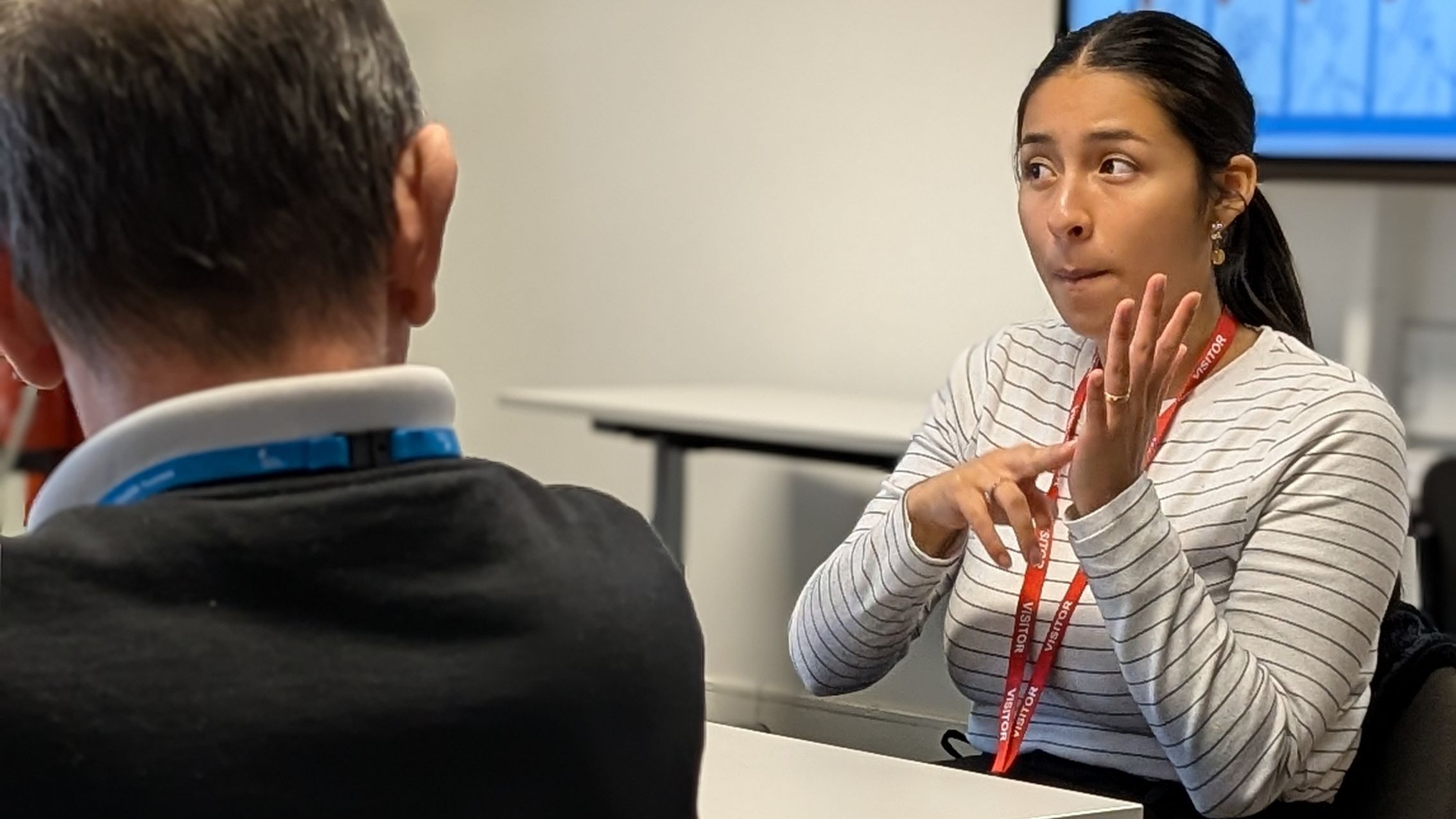
A while ago, one of our team shared a moment from an assignment that really stayed with us.
A Deaf professional was leading a meeting confidently, speaking with passion, humour, and authority. Afterwards, one of the hearing attendees described him as “quite unsure of himself.”
The interpreter was shocked.
Because the Deaf person had not come across that way at all.
And honestly, this is one of the most important lessons interpreters and CSWs eventually learn:
people are not only listening to the message we voice. They are also building an impression of the Deaf person through the choices we make while interpreting.
Tone matters.
Pace matters.
Confidence matters.
Word choices matter.
Even small decisions can change how someone is perceived.
A hesitant voice can make a confident Deaf professional sound uncertain. Softening confrontation can make someone appear passive. Over-explaining can unintentionally make a Deaf person seem less knowledgeable or independent than they really are.
Most of the time, these choices are not intentional. They often come from our own communication habits, personal discomfort, or unconscious ideas about what sounds “polite,” “professional,” or “appropriate.”
One interpreter once reflected on a situation where a Deaf man was angry during a workplace disagreement. Feeling uncomfortable with the level of confrontation, she softened his tone while voicing. Afterwards, she realised she had unintentionally changed how the hearing people in the room perceived him. The message was still technically there, but the personality behind it had shifted.
That level of self-awareness is incredibly important in our profession.
As interpreters and CSWs, we spend so much time focusing on accuracy that we sometimes forget authenticity matters too. The goal is not simply transferring words between languages. We are also carrying confidence, humour, frustration, professionalism, sarcasm, authority, and emotion across the interaction.
This becomes especially important in:
- interviews
- college settings
- workplace meetings
- presentations
- medical appointments
- disciplinary meetings
Because hearing people are constantly forming impressions, whether they realise it or not.
The difficult part is that many of our communication habits are invisible to ourselves until we stop and reflect on them properly. The way we personally deal with interruption, disagreement, confidence, directness, humour, or emotional expression can quietly affect our interpreting choices without us noticing.
That is why strong interpreters and CSWs do not stop learning once they qualify.
They reflect.
They analyse their work.
They stay connected to Deaf communities.
They observe different communication styles.
They ask themselves difficult questions after assignments.
“Did I truly represent that person authentically?”
“Did my own discomfort affect my choices?”
“Did the hearing person meet the Deaf person, or my version of them?”
These conversations matter because our work carries real influence.
At Deaf Umbrella, we encourage our staff to think beyond vocabulary and technical accuracy. The professionals who grow the most in this field are usually the ones willing to reflect honestly on the impact of their own choices and continue developing their understanding of communication, identity, and authenticity.
Because great interpreting is not only about language fluency. It is also about allowing Deaf people to be fully seen as themselves.
