
BSL Skills vs Professional CSW Skills: What’s the Difference?
You’ve got your British Sign Langauge (BSL) Level 3. You’ve spent hours learning vocabulary, practising receptive skills, fingerspelling and building your confidence. Then someone says:
“Have you thought about becoming a Communication Support Worker (CSW)?”
It sounds like a natural next step. You know BSL, you enjoy using it and you’d like to work with Deaf people. So, are you ready? Possibly. But there’s something we think every aspiring CSW should understand first: having BSL skills and having professional CSW skills are not quite the same thing.
Your BSL gives you the foundation
A CSW needs strong communication skills, so everything you’ve learned matters. Your receptive and expressive BSL, fingerspelling, facial expressions, ability to follow different signing styles and confidence communicating with Deaf people will all come with you into the role.
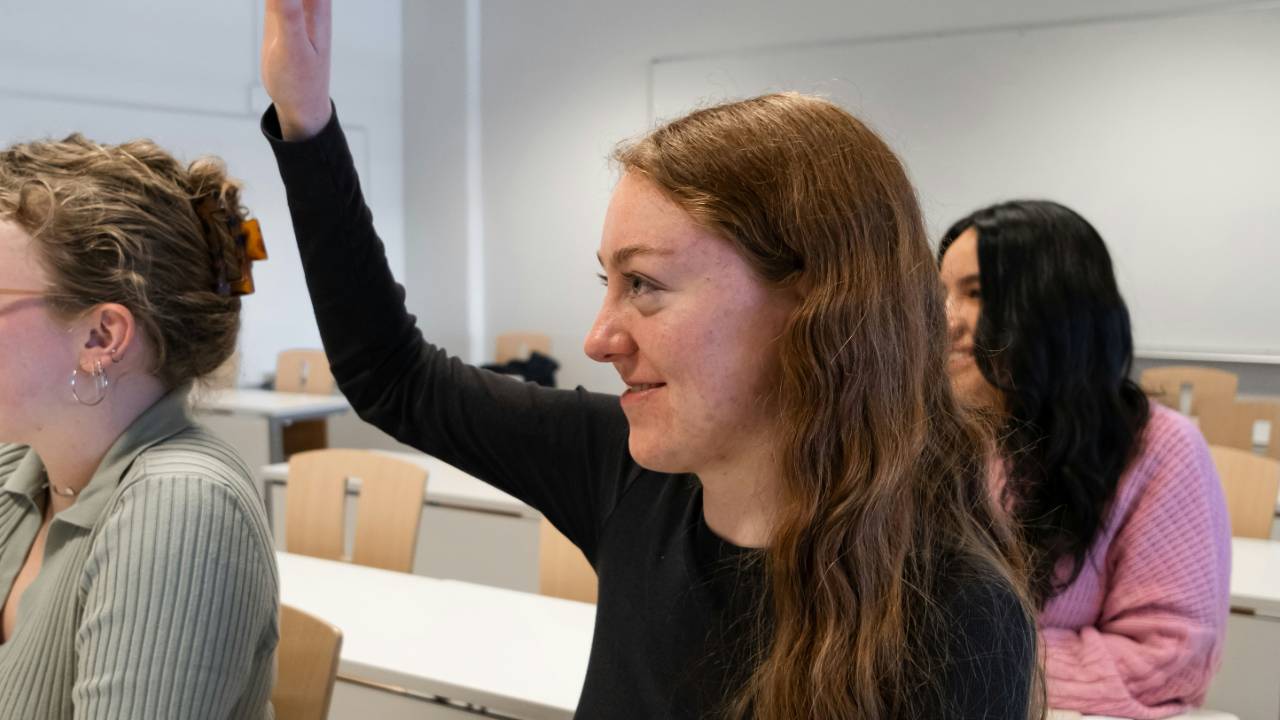
But a classroom is very different from a BSL lesson.
Imagine trying to follow a tutor while another student asks a question, someone makes a joke at the back of the room and a PowerPoint full of unfamiliar terminology appears on the screen.
That’s when you realise that knowing the signs is only one part of the job.
The professional side is a different skill set
A lot of CSW work comes down to judgement: How much should you help? When should you step back? What do you do if the student hasn't understood something? Should you say something to the tutor? What if you're asked to do something that doesn't feel like part of your role?
You also need to think about preparation, professional boundaries, student independence, working with tutors and other support staff, confidentiality and what to do when something doesn't go to plan.
These aren't things you necessarily learn while studying for your BSL qualification, and that's completely normal.
BSL skills + professional skills
Think of it this way: BSL skills help you communicate. Professional CSW skills help you know how to use that communication appropriately within your role.
You need both.
Someone can be a confident signer and still feel completely out of their depth during their first few weeks as a CSW. Equally, somebody who is newer to the profession can develop into an excellent CSW because they're reflective, willing to ask questions and committed to improving both their BSL and professional practice.
We've seen this many times.
The CSWs who develop well aren't necessarily the ones who walk into the job feeling completely confident. They're often the ones who are curious enough to think, “Was that the right way to handle it?” and then learn from the answer.
So, could you become a CSW with BSL Level 3?
If you're at Level 3 and the profession interests you, yes, it's absolutely worth exploring.
You don't need to wait until you feel you know everything, you never will. But before walking into your first classroom, it's worth learning about the professional side of the role as well as continuing to develop your BSL.
Talk to experienced CSWs. Learn from Deaf people. Find out what actually happens in educational settings and start thinking about the situations you might encounter.
This is also why we created Becoming a Professional CSW; The course is designed to bridge that gap between “I can sign” and “I understand how to work professionally as a CSW.” It takes you through practical situations that happen in education, so you can start developing your judgement, boundaries and confidence before you're expected to work everything out on your own.
The course includes around 8 hours of flexible learning, awards 8 CPD points and now costs £155 including VAT.
And you don't need to already be working as a CSW to join.
If you've reached Level 2 or Level 3 and you're starting to wonder “What could I do with my BSL?”, becoming a CSW could be one path worth exploring.
