
Can I Become a Communication Support Worker With BSL Level 2 or Level 3?
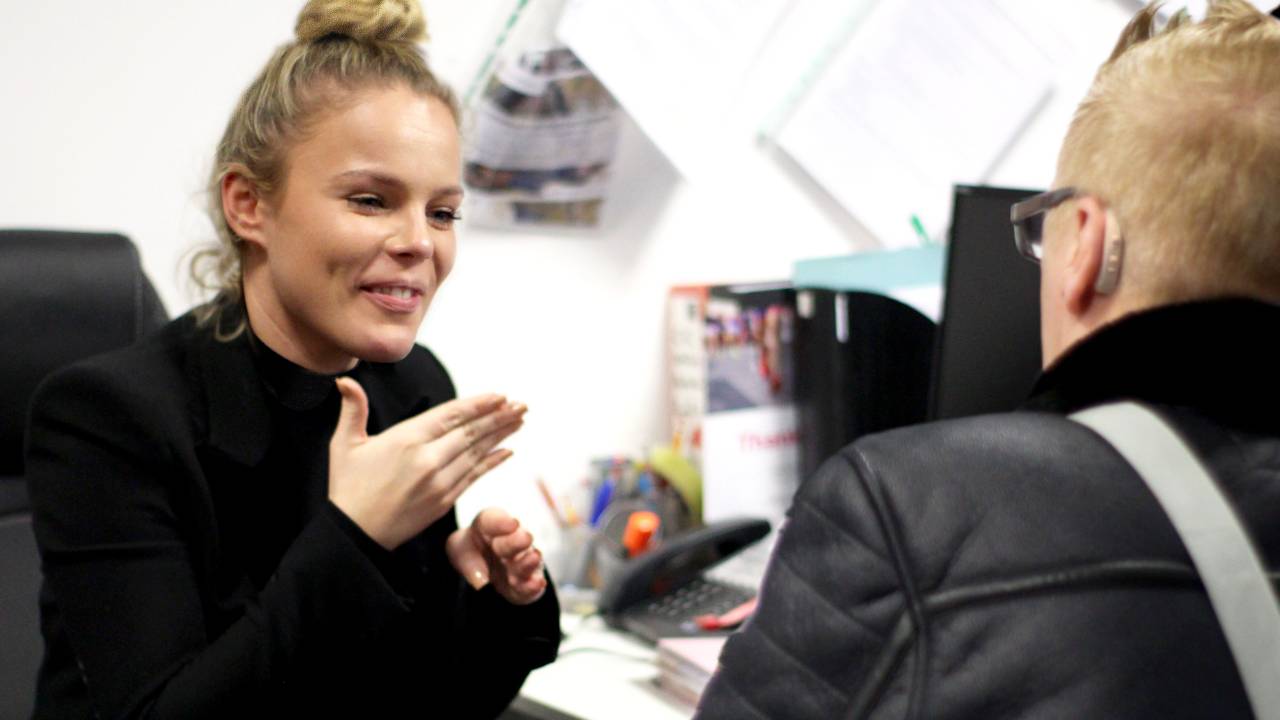
If you’re learning BSL and starting to think about where those skills could take you professionally, you may have come across the role of a Communication Support Worker (CSW).
And one of the first questions is usually:
“I have BSL Level 2 or Level 3. Can I become a CSW?”
The short answer is that it can certainly be a route worth exploring. But your BSL level is only one part of the picture.
Working as a CSW requires BSL skills, of course, but it also involves professional judgement, boundaries, preparation, an understanding of education and the ability to support a Deaf student without taking over their learning.
So before you start applying, it helps to understand what the job actually involves.
What does a Communication Support Worker actually do?
CSWs commonly work with Deaf students in colleges, universities and other educational environments, helping them access teaching and participate in their course.
What that support looks like will depend on the student and the setting. It may involve supporting communication between a Deaf student and teaching staff, helping them access classroom discussions and information, taking notes or supporting access to learning materials.
And then there are all the things happening around the lesson.
The tutor asks a question while facing the board. Several students start talking at once. A video is played without captions. New terminology appears that you haven't prepared for. The Deaf student asks you a question while you're trying to follow what the tutor is saying.
A real classroom can be fast and unpredictable.
That's why being able to sign doesn't automatically mean you're ready for everything the CSW role involves.
Is BSL Level 2 enough to work as a CSW?
There isn't one simple answer, because employers and education providers can have different requirements depending on the role, student and setting.
A person with BSL Level 2 may be at the stage where they're beginning to explore CSW work and build the additional skills they'll need. Some opportunities may ask for a higher level of BSL, while others may consider applicants who are still developing their skills alongside appropriate experience and training.
If you're at Level 2, the important thing is to be realistic about your current communication ability. Classroom communication can be considerably more demanding than a BSL lesson, particularly when you're following unfamiliar subject terminology or several people speaking at once.
Level 2 doesn't mean “CSW isn't for me.” It may simply mean there is more development to do before a particular role is right for you.
What about BSL Level 3?
Level 3 can give you a stronger foundation for exploring CSW work, and you may start seeing vacancies where your BSL level appears to meet part of the criteria.
But there's still a difference between:
“I can communicate in BSL” and “I know how to work professionally as a CSW.”
This catches some new CSWs by surprise.
Your BSL course teaches you the language. It doesn't necessarily teach you what to do when a student doesn't arrive, how to prepare for an unfamiliar lesson, where your professional boundaries sit or how to respond when a tutor asks you to do something you're unsure about.
Those are CSW skills, rather than simply BSL skills.
What professional skills does a CSW need?
A large part of the role comes down to judgement.
Imagine the student hasn't completed an assignment. How much help should you give?
You think they've misunderstood something the tutor said. Do you immediately step in?
A tutor asks you to complete a task that doesn't seem to be part of your role. How do you respond professionally?
Or perhaps you're asked a question and simply don't know the answer.
These situations aren't unusual. A good CSW needs to understand professional boundaries, confidentiality, preparation, student independence, teamwork and reflective practice.
You'll also need to communicate professionally with tutors and other members of the support team. Sometimes that means asking for lesson materials in advance, requesting clarification or raising an access issue appropriately.
None of this requires you to know everything from day one; It does require a willingness to learn.
Supporting someone isn't the same as doing things for them
This is an important distinction for anyone considering CSW work.
When you're trying to be helpful, it can be tempting to step in whenever a Deaf student is struggling. But good support also means respecting the student's independence and allowing them to make their own decisions.
You aren't there to become the student's parent, teacher or spokesperson.
A CSW can help remove communication barriers while still allowing the Deaf student to participate, answer questions, make mistakes and take responsibility for their own education.
Learning when to help and when to step back is one of those professional skills that becomes stronger with training, experience and reflection.
What might employers look for?
There isn't a single checklist used by every employer, agency or educational setting, so always read the requirements of the individual vacancy carefully.
Your BSL level may be one consideration, but employers may also be interested in your experience of working with Deaf people, understanding of Deaf culture, communication skills, professionalism and experience within education or support environments.
They may want to know how you handle boundaries, whether you can work collaboratively with teaching staff, how you respond to difficult situations and whether you're committed to continuing your professional development.
And different roles may require different levels of experience.
This is why it's worth looking beyond the question “Do I have the right BSL certificate?” and asking “Am I developing the skills I would need to do this job well?”
How can I prepare before applying for CSW jobs?
If CSW work interests you, start learning about the profession while continuing to develop your BSL.
Spend time communicating with different Deaf people and experiencing different signing styles. Learn more about Deaf culture and Deaf people's experiences of education. If possible, talk to experienced CSWs about what their working day really looks like.
Look at actual CSW job descriptions too. They can give you a useful picture of what employers in your area are asking for and help you identify gaps in your own experience.
Professional development can also help you understand situations you may encounter before you're dealing with them for the first time in a classroom.
And get comfortable with asking questions.
One of the most useful habits you can develop early in your career is being able to say, “I'm not sure. Can I check?”
Could CSW work be your next step?
If you have BSL Level 2 or Level 3 and you're interested in working with Deaf students, becoming a CSW is certainly a profession you can explore.
Your BSL gives you an important foundation. From there, you can develop your understanding of the role, professional practice and the realities of supporting Deaf students in education.
If you'd like some structured preparation, our Becoming a Professional CSW online course was created for people who want to understand that professional side of the job.
It explores practical areas such as the CSW role and responsibilities, professional boundaries, ethics and confidentiality, classroom practice, preparation, notetaking and situations you're likely to encounter in education.
The course is self-paced, includes around eight hours of learning and eight CPD points, and you don't need to already be employed as a CSW to enrol.
Importantly, the course isn't a CSW qualification or a guarantee of employment. Employers will have their own requirements, and you'll still need the appropriate BSL skills and any experience or qualifications requested for the individual role.
What it can do is help you understand what professional CSW work involves, identify areas you may need to develop and feel better prepared when deciding whether this career is right for you.
If you've reached the point where you're thinking “I have BSL Level 2 or Level 3. What now?”, that could be a very useful next question to explore.
👉 Explore Becoming a Professional CSW: https://deafumbrella.mykajabi.com/professional-csw
